2026-10-26 ·
Ice Dams, Heat and Sun: How Frederick Weather Ages a Roof
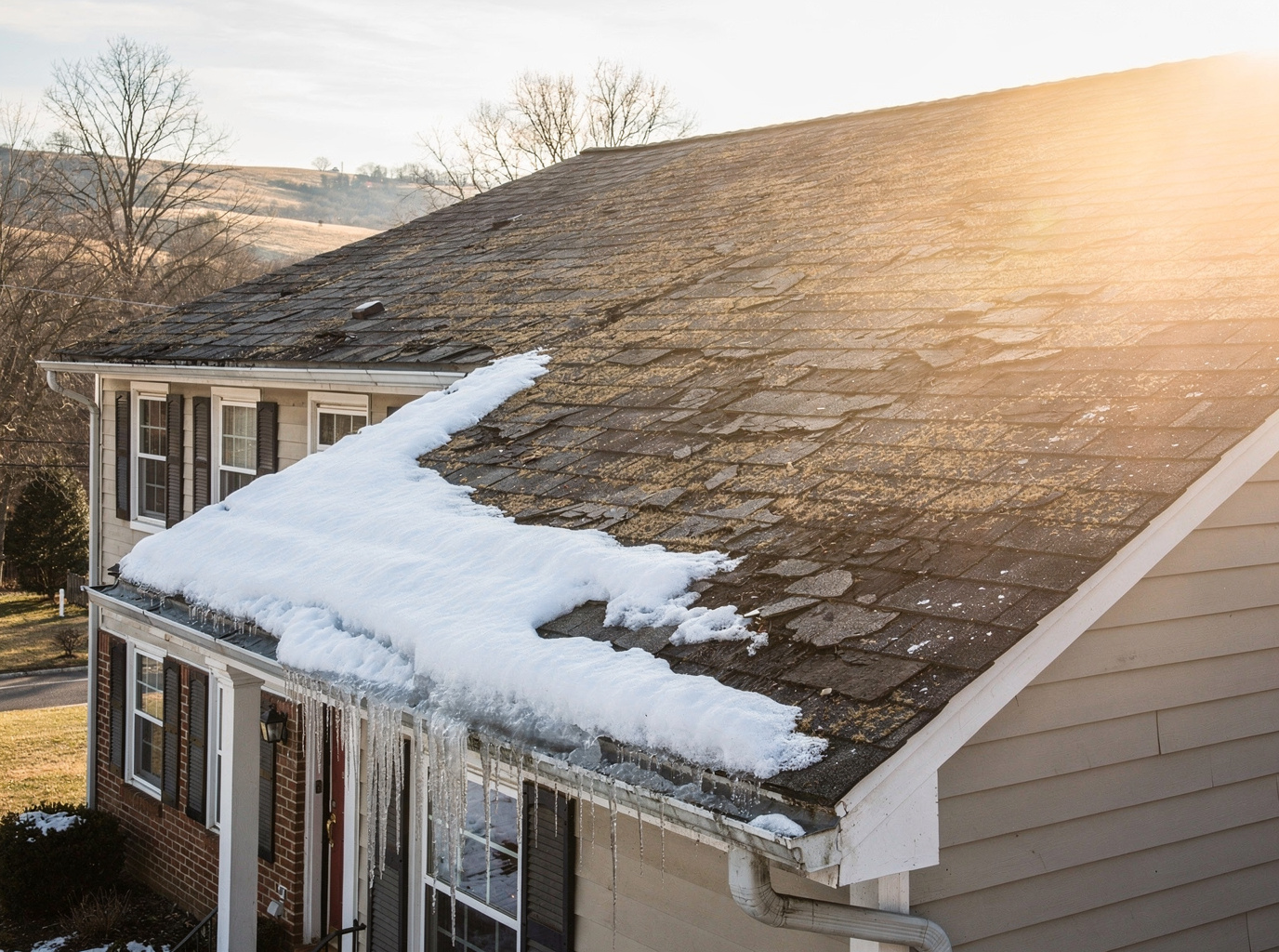
Frederick weather ages roofs through repeated freeze-thaw cycles that form ice dams and through prolonged summer heat that bakes shingles. In the humid subtropical climate, cool winters allow snow to melt during the day then refreeze at night along the eaves, pushing water under roofing layers. Hot summers with high temperatures add UV exposure that dries out materials faster than in milder regions. Over time these forces combine to shorten service life in areas such as the Frederick Historic District and Baker Park neighborhoods.
Ice Dams in Frederick Winters
Cool winter nights in Frederick County turn melting snow into ice dams along roof edges. Water backs up under shingles and soaks insulation or ceilings in homes throughout Ballenger Creek and Clover Hill. Older houses near the Frederick Historic District often have steeper pitches that trap more snow, increasing the chance of dam formation. Gutters clogged with leaves worsen the problem by holding ice in place. Gutter Problems That Damage Frederick Roofs explains how blocked drainage contributes to this cycle. Regular checks after each freeze help catch damage before leaks reach interior walls.
Ice dams also stress flashing around chimneys and vents. When water finds a path inside, it can rot decking boards within one or two seasons. Homeowners in Wormans Mill report visible water stains on attic sheathing after repeated events. Addressing the dams early keeps the cost of roof repair lower than full replacement later.
Heat and Sun Damage During Frederick Summers
Hot summers in Frederick push roof surface temperatures well above air readings, drying out asphalt shingles and fading their protective granules. UV rays break down the binder that holds granules in place, leaving exposed felt that absorbs more heat. Over 8 to 12 years this process accelerates cracking and curling on south-facing slopes common in Clover Hill subdivisions. The same exposure affects rubber membranes on low-slope sections near Downtown Frederick commercial buildings.
High humidity adds another layer by trapping moisture under lifted shingles, which then cooks during peak afternoon heat. This combination speeds granule loss and shortens the interval before leaks appear. Roof Moss, Algae and Stains in Frederick: What They Mean covers how organic growth takes hold once sun damage creates rough surfaces. Replacement intervals shorten when both winter ice and summer sun act on the same roof.
Signs Your Roof Needs Attention
Curling shingle edges, missing granules in gutters, and water stains on ceilings signal that Frederick weather has aged the roof. Ice dam scars often appear as dark lines along eaves after spring thaw. In Ballenger Creek, homeowners also see sagging near skylights where heat has softened underlayment. Checking these markers after each season helps decide between targeted fixes and broader work.
When multiple signs appear together, the company that serves your ZIP code can evaluate whether roof repair will restore performance or whether roof replacement is the practical next step. Early action prevents interior damage that raises total project costs.
Planning Roof Work Around Local Weather Patterns
Scheduling inspections before winter helps identify weak spots before ice dams form again. After summer, checking for lifted shingles reveals sun damage that could worsen during the next freeze cycle. Homes near Baker Park and the National Museum of Civil War Medicine often share similar roof ages, so patterns observed on one block can guide neighbors. Questions to Ask a Roofing Contractor in Frederick outlines points to cover when discussing timelines and material choices suited to the local climate.